Powering Progress: Thirty Years of Watts Bar Nuclear Plant and Its Impact on Rhea County
Rhea County's history is often told through its pioneers, river communities, industries, and nationally significant events such as the Scopes Trial. Yet, as historians, we recognize that history is not confined to the distant past. Major developments of our own time will one day be studied alongside the stories of early settlers, farmers, merchants, and civic leaders. One such development is the Watts Bar Nuclear Plant, which this year celebrates thirty years of commercial operation. While thirty years may seem recent in a county founded in 1807, the plant has already secured its place as one of the most influential institutions in modern Rhea County history.
For much of the nineteenth century, Rhea County's economy was centered on agriculture and river transportation. The Tennessee River served as a vital artery for commerce, connecting local communities to broader markets. During the late nineteenth and early twentieth centuries, coal mining, iron production, and manufacturing emerged as important economic drivers. The arrival of the Tennessee Valley Authority in the twentieth century transformed the region through flood control, navigation improvements, and electrification. The construction of Watts Bar Dam in the 1940s represented a significant chapter in that transformation. Decades later, the development of the Watts Bar Nuclear Plant continued that legacy, marking another milestone in the Tennessee Valley's evolving relationship with energy production.
When Unit 1 entered commercial operation in 1996, it became one of the most advanced energy facilities in the nation. The plant brought highly skilled employment opportunities to the area and generated substantial economic benefits for Rhea County and neighboring communities. Thousands of workers participated in its construction and operation, while local businesses, schools, and governments benefited from the economic activity it generated. For many families, careers at Watts Bar have spanned generations, making the facility not simply an employer but an enduring part of the community's fabric.
Beyond its local impact, Watts Bar Nuclear Plant has played an important role in meeting the energy needs of the Tennessee Valley and the nation. Nuclear energy provides reliable, around-the-clock electricity without producing carbon emissions during operation. As Americans increasingly discuss energy independence, grid reliability, and the future of power generation, facilities like Watts Bar remain essential to the conversation. The plant's continued operation demonstrates how technological innovation and long-term planning can serve both economic and environmental goals.
As the plant celebrates its thirtieth anniversary, it is worth reflecting on how future historians may view this chapter of Rhea County's story. Just as we study the arrival of steamboats, the construction of railroads, or the development of TVA projects, future generations will likely examine the role Watts Bar Nuclear Plant played in shaping our community. History is ultimately the story of people adapting to change and building for the future. For three decades, Watts Bar Nuclear Plant has been part of that story, contributing to the prosperity, stability, and progress of Rhea County while continuing a long tradition of innovation along the Tennessee River.
As Rhea County prepares to turn 219, its history reminds us that communities willing to embrace innovation while preserving their heritage are often the ones best prepared to lead the future.
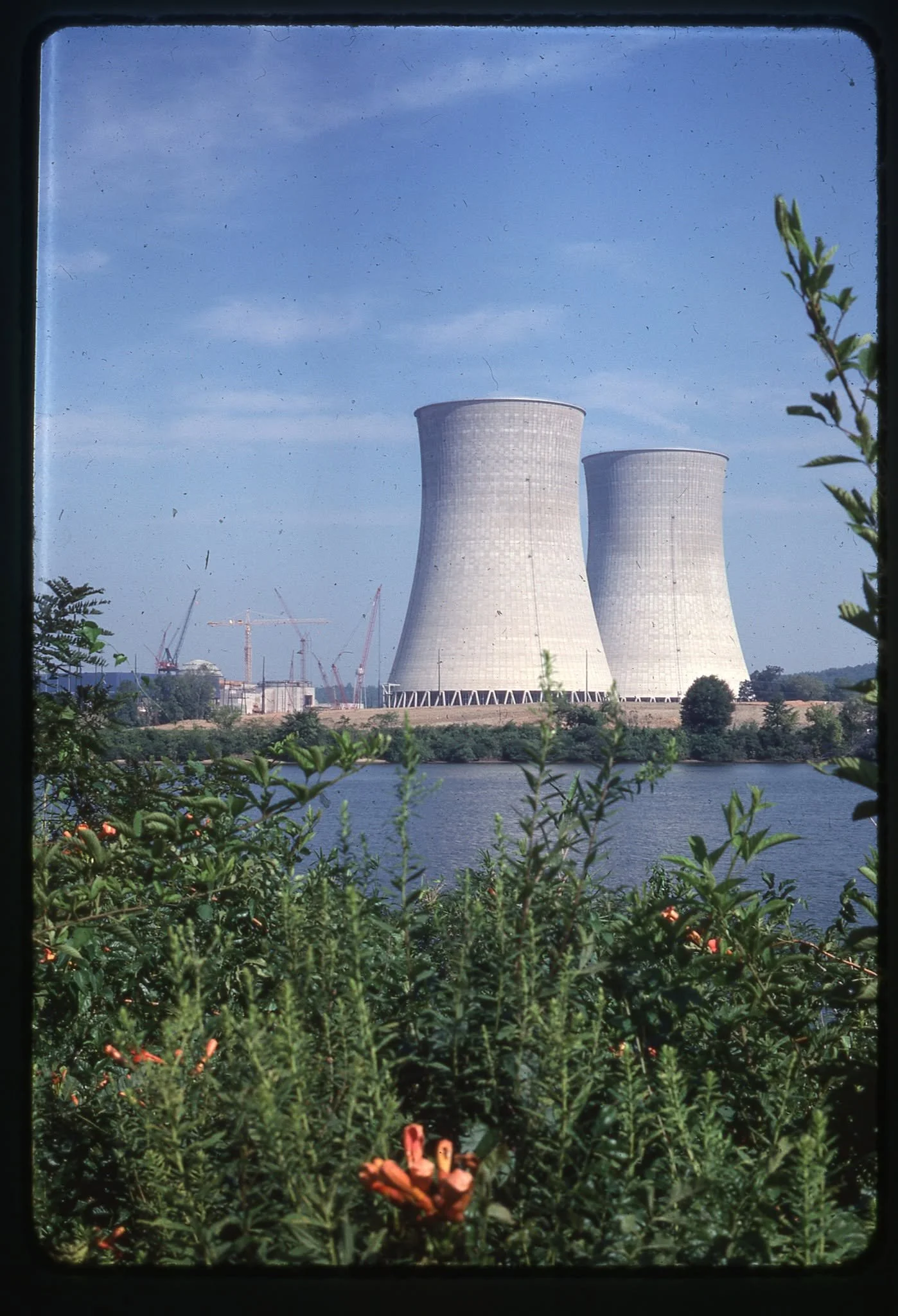
Watts Bar Nuclear Plant under construction, 1977